

Sustainability is no longer merely an environmental or compliance issue. An increasing number of companies recognise that it can also serve as the foundation for long-term competitiveness, innovation, and customer trust. In this transformation process, an unexpected player has moved into the spotlight: marketing.
The joint global benchmark study conducted by the United Nations Global Compact and Kantar, involving more than 1,700 business leaders, was the first to examine the role of marketing in sustainable business transformation. The findings are both encouraging and cautionary: while the majority of companies have already embarked on this journey, a significant gap remains between strategic ambitions and actual implementation.
| WRITER: Papp Viktória
Sustainability has become a business issue
Companies today operate in an extremely complex environment. Economic uncertainty, geopolitical tensions, technological transformation, climate change, and social challenges are all shaping markets. It is therefore not surprising that 88% of CEOs believe the business importance of sustainability is stronger today than it was five years ago, and that almost all companies are maintaining or further strengthening their sustainability commitments.
Consumer expectations are also changing rapidly. Globally, nearly three-quarters of consumers believe that companies should take an active role in addressing social and environmental challenges. Particularly among younger generations, the values represented by a brand and its contribution to building a sustainable future have become increasingly important factors.
Good intentions alone are no longer enough
One of the most interesting findings of the study is that 69% of marketing leaders feel that their organisation is making good progress in integrating sustainability into marketing. However, when respondents were asked about more specific operational areas, the average performance assessment dropped to only 52%.
This suggests that in many companies sustainability has already appeared in communications and strategic documents, but has not yet been fully embedded into everyday decision-making, operational processes, and innovation activities. The real challenge, therefore, is not commitment, but execution.
The new role of marketing: not communicating change, but shaping it
Traditionally, marketing’s role has been brand building and consumer communication. The sustainability transition, however, requires much more from the profession.
According to the research, companies demonstrate the strongest performance in communication and brand strategy. More than half of organisations are already able to communicate their sustainability efforts more credibly, and an increasing number are building trust through sustainability. At the same time, significantly weaker results can be seen in innovation, circular business models, and organisational collaboration.
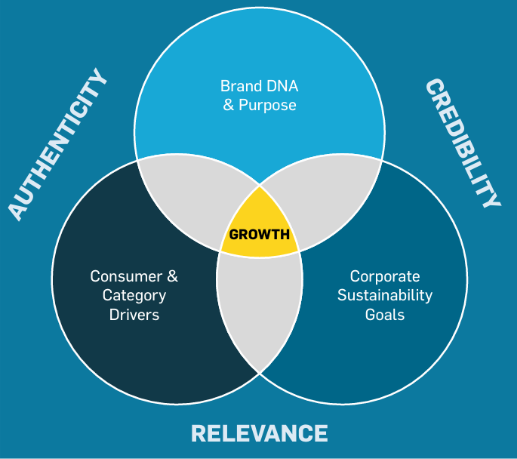
This is particularly important because sustainable growth is not a communications project. True competitive advantage emerges when sustainability is integrated into product development, business models, supply chains, and corporate culture.
One of the biggest challenges: organisational collaboration
The study highlights a less visible but critical issue. Marketing professionals and sustainability experts have significantly different perceptions of their companies’ progress.
While nearly 70% of marketing professionals believe their organisation is progressing well or very well in sustainability integration, this proportion is considerably lower among sustainability leaders. The difference suggests that the two functions often operate with different objectives, performance indicators, and definitions of success.
According to the research, the lack of shared goals, jointly defined KPIs, and clear responsibilities slows down transformation. Sustainability is not the responsibility of a single department; it requires organisation-wide collaboration.
Innovation and circularity: the next major opportunity
It is particularly interesting that many companies still do not clearly recognise the business potential of circular business models. Only one-quarter of marketing leaders believe that the circular economy can create significant and profitable growth opportunities.
However, the best practices included in the research demonstrate the opposite. Companies that treat sustainability not as a communication tool but as an innovation platform are able to create new revenue streams, strengthen customer relationships, and increase market resilience.
Sustainability therefore appears not as a cost, but as a business opportunity.
According to Mandy Fertetics, Managing Director of Alternate, this gap is a warning sign:
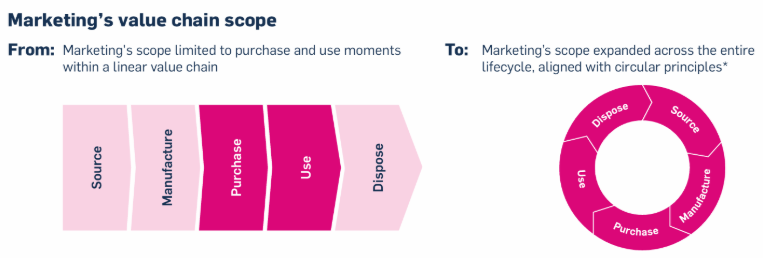
“Circular economy models cannot be implemented at corporate or economic scale without radically changing consumer behaviour and consumption patterns. It is not enough to simply say: ‘put the packaging into the recycling bin after you have consumed the product’. Consumers may need to be encouraged to move from ownership towards service-based models, from purchasing new products towards renting, repairing, or buying on secondary markets. This may represent a new and challenging task for marketing, especially as the risk of greenwashing continues to grow and the scrutiny applied by watchdogs and regulators becomes increasingly rigorous.”
(You can find our previous article on greenwashing here.)
What does this mean for Hungarian companies?
One of the most important lessons from the research is that the next level of sustainable growth is no longer about making commitments. Success depends on integration.
The organisations that will succeed in the future are those that:
- and are able to credibly connect business performance with social and environmental value creation.
- integrate sustainability into their business strategy;
- assign measurable targets and performance indicators to sustainability objectives;
- strengthen cooperation and alignment between marketing, innovation, and sustainability functions;
- develop new sustainable solutions based on consumer needs while simultaneously shaping consumer expectations.
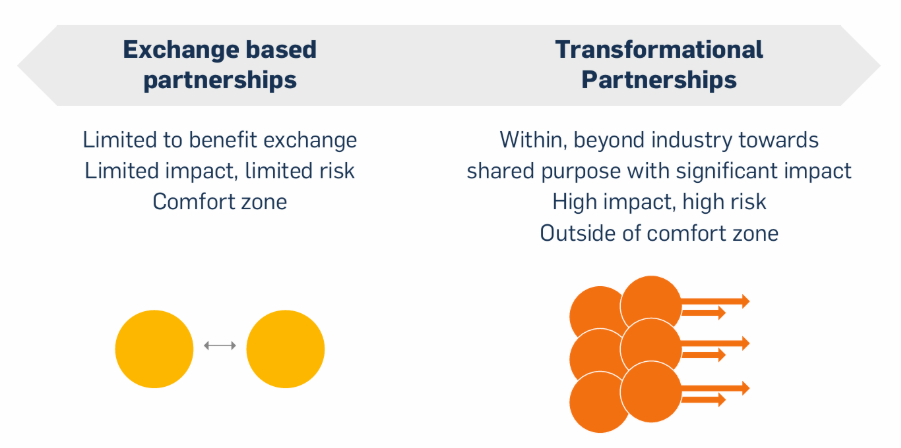
Sustainability is no longer a standalone programme; it has become a defining factor of corporate competitiveness. The question is not whether it is worthwhile to integrate sustainability into business operations, but which companies will be able to do so faster, more credibly, and more effectively.
The latest international data makes this clear: in the era of sustainable growth, marketing does not merely communicate change — it is one of the most important drivers of that change.
What does this mean in practice?
One of the key messages of the research is that sustainability ambitions alone are no longer sufficient. True competitive advantage is created by organisations that can transform sustainability goals into business decisions, innovation, credible communication, and measurable outcomes.
At Alternate, we experience that the greatest challenge is rarely developing a sustainability strategy itself. The real difficulty lies in ensuring that sustainability objectives are reflected in everyday operations, product development, marketing, supplier relationships, and corporate culture. The question is whether a company can create a commercially viable, market-ready model that successfully combines the sustainable characteristics of its product or service with market competitiveness.
This is why we support our partners in making sustainability not a separate project or compliance exercise, but a key driver of growth, innovation, and long-term value creation.
If you are interested in the details of the research, you can read more about it here:
https://info.unglobalcompact.org/un_global_compact_kantar_cmo_blueprint_benchmark_study